The Minimum Effective Habit: How Small Can a Habit Be and Still Work?
Tiny habits are popular advice — but how tiny is too tiny? A research-backed look at the actual minimum dose where a habit still produces measurable change.
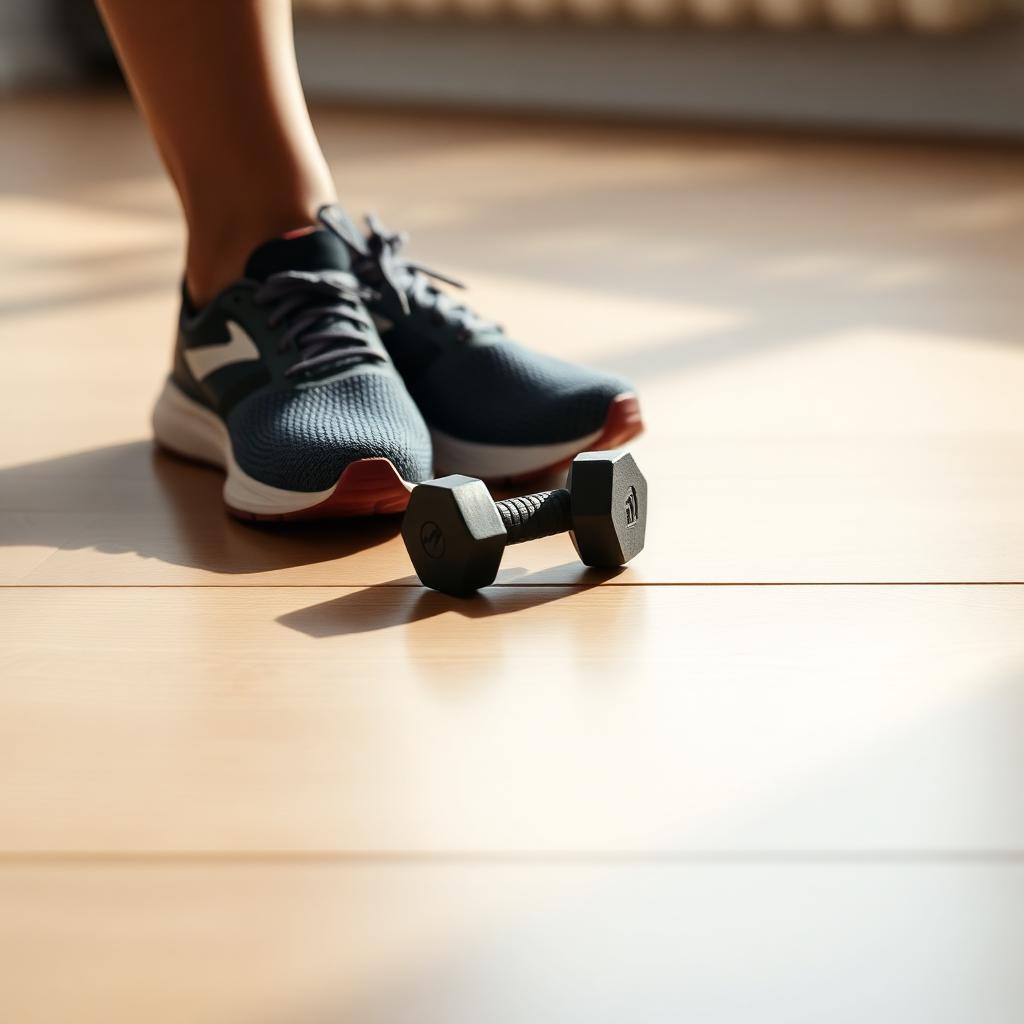
The tiny-habits movement, championed by BJ Fogg and amplified by James Clear, has been one of the most useful interventions in modern habit psychology. The instruction is liberating: instead of trying to meditate for 20 minutes, take one breath. Instead of running three miles, put on the running shoes. The smaller the habit, the more likely it survives.
But somewhere in the conversation, "small enough to survive" has slipped into "so small it can't possibly do anything." A breath is not meditation. A shoe is not exercise. At some point the habit becomes performative — small enough to mark complete every day but too small to change anything. So where is the actual line? How small can a habit be and still produce measurable change in your life?
The answer turns out to be more nuanced than either camp admits.
What the research says about minimum effective dose
The phrase "minimum effective dose" comes from pharmacology — the smallest amount of a drug that produces the intended biological effect. Below that, you're not under-treating; you're not treating at all. The same concept applies to habits, and the research suggests three different minimum doses depending on what the habit is for.
For identity formation: the dose is genuinely tiny. A single repetition of a behaviour, performed deliberately under the label "I am the kind of person who does this", measurably shifts self-concept. BJ Fogg's research suggests that even a single push-up, done consistently for a few weeks, produces real identity change even though the physiological effect is essentially zero.
For neurological habit formation (automaticity): the dose needs to be just large enough to trigger the cue-routine-reward loop. Lally et al.'s 2010 University College London study found that the median time to automaticity was 66 days of consistent repetition — but only if the behaviour was performed in a way that the brain registered as a complete unit. One breath is too small for the brain to register as a meditation event. Five breaths usually is enough.
For physical adaptation (fitness, flexibility, weight change): the dose is much larger. The body adapts to load, and the load has to cross a threshold to trigger adaptation. One push-up will not make you stronger; ten push-ups three times a week, sustained for three months, demonstrably will.
The implication is that the right minimum effective habit depends entirely on what you're trying to achieve. People conflate these three categories and end up disappointed.
The three jobs a habit can do
Every habit, regardless of size, is doing one or more of three jobs. Knowing which job you actually care about determines the minimum size.
Job 1: Identity reinforcement. "I am a person who writes." "I am a person who moves my body." The habit's purpose is to repeatedly cast a small, undeniable vote for who you are. The minimum dose here is genuinely small — a single sentence, a single push-up, a single page. Below that threshold the brain stops counting it as evidence.
Job 2: Automaticity. The habit's purpose is to become effortless, to happen without decision. The minimum dose is the smallest version that the brain registers as a complete behavioural unit — usually somewhere between 2 and 5 minutes. Below that, the brain doesn't form the automation.
Job 3: Outcome production. The habit's purpose is to change a measurable thing in the world — your body, your finances, your skill, your relationships. The minimum dose here is governed by the underlying biology or mathematics of the outcome, not by your habit-formation preferences. There is no two-minute version of becoming fluent in Mandarin.
The tiny-habits literature is excellent for jobs 1 and 2. It is misleading when applied to job 3, and most habit failures at the "I've been doing this tiny habit for six months and nothing's changed" stage are because the user wanted job 3 but only paid the dose for job 1.
The honest minimums for common habits
Meditation
Identity dose: one minute. Automaticity dose: five minutes. Outcome dose (measurable stress and attention changes): ten minutes daily for eight weeks (the MBSR baseline). If you've been doing one minute for a year and wondering why you're not calmer, the dose was for the wrong job.
Exercise
Identity dose: one push-up or one stretch, daily. Automaticity dose: a 10-minute movement block, four times a week. Outcome dose (measurable fitness gains): roughly 150 minutes of moderate movement per week, per the WHO guideline that has held up across decades of revision.
Reading
Identity dose: one page a day. Automaticity dose: 10 minutes a day. Outcome dose (24+ books a year): about 30 minutes a day, or one focused hour on weekends plus shorter weekday sessions.
Writing
Identity dose: one sentence a day. Automaticity dose: 100 words a day. Outcome dose (a finished book in a year): 500 to 1,000 words a day, sustained.
Language learning
Identity dose: one flashcard a day. Automaticity dose: 15 minutes a day. Outcome dose (conversational fluency in a year): 45–60 minutes a day plus weekly speaking practice.
Saving money
Identity dose: any amount, automatically transferred. Automaticity dose: a fixed amount you don't have to think about. Outcome dose: governed entirely by your goals and income — no tiny version exists for "retire at 50."
The deliberate use of identity-dose habits
This doesn't mean identity-dose habits are pointless. They're often the right starting point, because they're the only version of the habit that has a real chance of surviving long enough to upgrade. The mistake is staying at identity dose forever and being surprised that nothing changes downstream.
The workflow that actually works for most people: start at identity dose. Hold it for 30 days. Then upgrade — by perhaps 50% — and hold the new size for another 30 days. Repeat until you reach outcome dose, or until the habit has settled at whatever size your life can actually support.
This is the part the tiny-habits books underplay. The tiny version is the entry-point, not the destination. Most habit failure happens either at the entry-point (the habit was too big to start) or at the upgrade (the user got comfortable at tiny and never grew it).
When tiny stays right
For some habits, tiny is the destination. Flossing one tooth, drinking a glass of water before coffee, making the bed — these don't need upgrading. The benefit is delivered in full by the small version. Trying to "scale" them is meaningless.
The test: if scaling the habit up would not produce a meaningfully larger result, the tiny version is the right size permanently. If scaling would produce a larger result, the tiny version is just your starting place.
How to know when to scale
Three signals indicate it's time to upgrade the habit's dose.
The habit has become genuinely automatic. You no longer have to think about it. The cue fires and the behaviour happens. This usually takes 30–66 days. Until then, do not scale; the automation is more valuable than the size.
The current version no longer feels like effort. Not just "I'm doing it consistently" but "this is now too small to even register." That's the sign that the dose-response curve is asking for more.
You're starting to want more. Not in a perfectionist way — in a genuine "I've been doing one page and I'm curious what five would feel like" way. Follow that curiosity. It's the cleanest signal habit psychology has.
The full doctrine, in one line
Start tinier than you think is necessary. Hold the tiny version long enough for it to become automatic. Then grow it deliberately — by small upgrades, with the same anchor and cue — until it reaches the dose that actually produces the outcome you wanted in the first place. Don't conflate identity, automaticity, and outcome doses. Almost every "tiny habits don't work" story is someone who paid the identity dose and expected the outcome.
Ready to build the habit?
HabitPal is the gentle AI coach behind every article on this blog.