How to Quit Vaping for Good (The Habit Replacement Guide)
Quitting vaping is two problems: nicotine dependence and a deeply ingrained habit loop. Here's the structured replacement protocol that addresses both, without willpower.
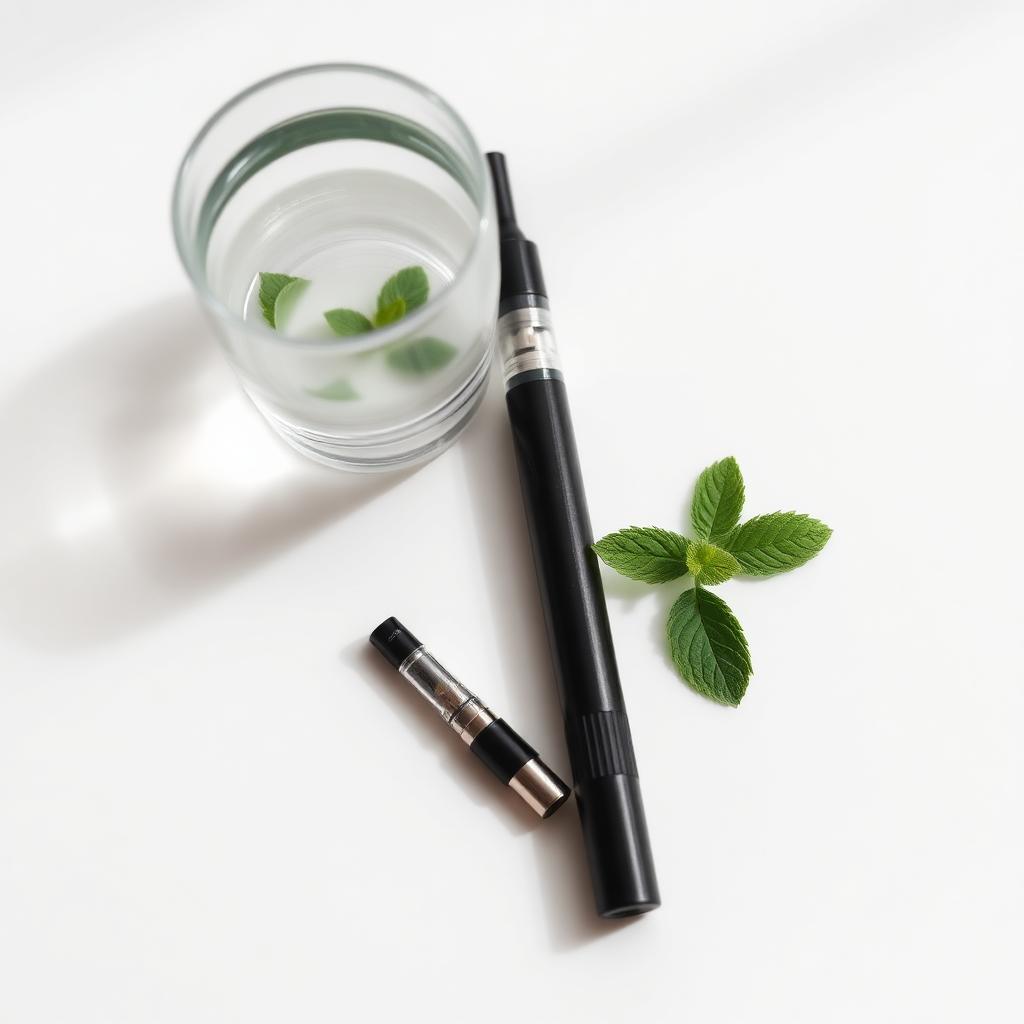
Vaping is harder to quit than most people expect, and the reason is structural. Cigarettes had a built-in interruption: you finished one, and then you stopped for fifteen minutes. Vaping has no natural endpoint. The device is in your hand or pocket all day, the puffs are short, the cues are constant, and the nicotine concentration in modern devices is several times higher than in cigarettes. By the time someone tries to quit, they've usually been taking 200 to 500 micro-hits per day for years, often in nearly every context of their life.
This means quitting vaping is two problems running in parallel. The first is nicotine dependence — a real physiological withdrawal that lasts roughly two weeks and peaks around day three. The second is the habit loop — hundreds of daily cues that have been paired with the device for thousands of repetitions. Most quit attempts fail because people treat it as one problem (usually the nicotine), address that problem, and then are blindsided by the habit half.
This guide is the replacement protocol that handles both. It's not a substitute for medical advice, and for heavy users, a doctor can prescribe medications (nicotine replacement therapy, varenicline, bupropion) that materially improve success rates. But even with medication, the habit work below is what determines whether you're vape-free at six months or back at your old intensity by week four.
Why vaping is uniquely hard among nicotine products
Three things make vaping harder to quit than cigarettes were. Higher nicotine concentration: modern disposable vapes deliver nicotine at roughly two to three times the concentration of cigarettes, producing faster dependence and steeper withdrawal. Continuous use: with no natural stopping point per session, users hit the device hundreds of times per day in contexts where cigarettes wouldn't have been possible — at desks, in cars, in bed. Ubiquitous cues: because the device went everywhere, the cue list is enormous. Phone in hand → vape. Sitting down → vape. Finishing a meal → vape. Walking out the door → vape. Stress → vape. Boredom → vape. Joy → vape.
The cue density is the part most quit guides underestimate. If you used a cigarette in roughly ten contexts per day, you used your vape in perhaps fifty. Every one of those contexts is a cue that will continue firing after the device is gone, and every one of them is a potential relapse point.
Day zero: The setup
The single most predictive variable in successful quit attempts is preparation. People who pick a quit date a week in advance and prepare deliberately have roughly twice the success rate of people who quit impulsively. The preparation week is where you do the work that makes the first week of quitting survivable.
Decide your method: cold turkey, taper, or nicotine replacement. Cold turkey has the highest dropout in the first week and the highest success rate among people who survive the first week. Taper is gentler but extends the quit timeline and tends to drift indefinitely without a hard endpoint. Nicotine replacement (gum, lozenges, patches) is the highest overall success rate option and is appropriate for most quitters. Pick one and commit.
Remove every device. Not "put away." Not "in a drawer." Out of the house. Out of the car. Out of the office bag. Every one of them. If there's a device anywhere reachable, you will reach for it in the first 72 hours.
Identify your top five contexts. Where do you vape most? Morning coffee. Driving. After lunch. After dinner. In bed. Whatever your specific five are, write them down. These are the contexts that need a planned replacement before the cue arrives.
Tell two people. External accountability roughly doubles success rates. Tell one person who will check in daily and one who you'd be embarrassed to disappoint. Quitting privately is dramatically harder than quitting with two people in the loop.
Days 1–3: The physical wall
The first 72 hours are dominated by physical withdrawal. Symptoms peak around hour 72 and start declining from there. Expect: irritability, restlessness, difficulty concentrating, headaches, increased appetite, low mood, insomnia or restless sleep, and craving spikes every 10 to 30 minutes. The cravings are intense but typically last only three to five minutes each before passing.
The most useful frame for these three days: the cravings will pass whether or not you give in. Each one peaks within five minutes and subsides. Your only job is to outlast each individual craving, one at a time. Don't think about quitting forever. Think about getting through the next one.
Practical tools: hold a glass of cold water, splash cold water on your face, take a five-minute walk outside, do twenty pushups or squats, chew gum, use a fidget object, call the person you've designated. The cue needs somewhere to land. The vape used to be in your hand; something needs to occupy the hand. A pen, a stress ball, a worry stone, a piece of fruit.
For people using NRT: follow the dosing instructions carefully and use the gum or lozenge proactively at high-craving moments rather than waiting until the craving is already intense. The pre-emptive dose is dramatically more effective than the reactive one.
Days 4–7: The habit wall
The physical withdrawal eases noticeably by day four. The cravings are still present but less frequent and less intense. What replaces them is the habit half of the problem: hundreds of contextual cues still firing, with no nicotine response attached to the new behaviour. This is when the protocol shifts from physical management to habit replacement.
Take your list of five top contexts and design a specific replacement for each. The replacement has to be visible, ready, and roughly the same shape as the original behaviour — something you do with your hands and mouth in the same context.
Morning coffee: a glass of water before coffee, a five-minute walk while the kettle boils, a brief stretch routine. Driving: sunflower seeds, gum, a podcast that requires actual attention, a steering wheel grip squeeze sequence. After meals: a piece of fruit, a brisk walk around the block, tea, brushing your teeth immediately. Stress: a four-count box-breathing cycle (four seconds in, four hold, four out, four hold) repeated five times. In bed: phone out of the bedroom, book on the pillow, the device entirely out of the building.
The replacements are not satisfying in the same way. They aren't supposed to be. They're occupying the cue. Every time the cue fires and lands on something other than the device, the pathway weakens. By day seven, with consistent replacement, the cues are still firing but the autopilot is broken.
Days 8–14: The integration
The second week is when most quit attempts succeed or fail invisibly. The physical withdrawal is gone. The cravings are intermittent. You feel basically normal most of the time. The danger is precisely this normality: it makes "just one" feel low-cost. It isn't. One puff reinstates the loop with about 80% efficiency, and most people who take one are back at half their previous intensity within four days.
The intervention is the abstinence violation reframe (see "Why You Keep Falling Back Into Bad Habits"). Going from zero to one is dramatically more costly than going from any other number to one more. Hold the zero. The second week is where holding the zero stops requiring effort and starts feeling like the default — provided you don't break it.
In parallel, this is the week to start identity work. "I don't vape" rather than "I'm trying to quit." Use the sentence with new people who don't know you used to vape. Their casual acceptance of it as a fact is more powerful than any internal monologue.
Days 15–30: The freedom
By the third week, the cues continue to fade in frequency and intensity. Most users report that the device starts to look slightly strange when they encounter one — like an object from a previous version of themselves. Breath capacity has noticeably improved, taste is sharper, sleep is deeper, and the low-grade anxiety baseline that nicotine produces (despite feeling like an anxiolytic in the moment) has started to lift.
By day 30, the physical changes are substantial: cilia in the lungs have begun regenerating, circulation has improved, resting heart rate has dropped, and inflammatory markers have measurably declined. The cravings are now occasional and contextual. Most people describe day 30 as the first day they feel "out of it" — as in, out of the loop, no longer in active recovery, in possession of their own attention again.
What to do at six weeks and six months
The first relapse danger zones are around weeks two, six, and twelve — points where the felt experience of being "fine" produces overconfidence and the casual decision that one puff would be harmless. The second danger zone is the first major emotional event after quitting — a breakup, a job loss, a family crisis. The replacement plan from week one has to be ready for those moments before they arrive.
At six weeks, run a small check-in: are your replacements still in place? Are the high-risk contexts still defended? At six months, the habit is generally well-broken, but the neural pathway never fully disappears — a return to vaping after years of abstinence will reinstate the loop within days, not weeks. This is not a defect; it's how habit memory works. The freedom is real, but it's a freedom that requires you to not put the device back in your hand.
If you relapse
Most people who eventually quit vaping for good do so on attempt two or three, not attempt one. A relapse isn't a verdict — it's data. What context loaded the relapse? What replacement wasn't in place? What emotional state had you unprepared? Each attempt produces a more accurate map and a higher-probability next attempt. The people who quit for good are not the people who succeeded on the first try. They're the people who treated each attempt as a draft, kept the parts that worked, and tried again.
Ready to build the habit?
HabitPal is the gentle AI coach behind every article on this blog.