Habits in Your 40s: What Changes, What Stops Working, and What to Build Now
The habits that worked in your 20s and 30s stop carrying their weight in your 40s. A research-grounded guide to the habits that matter most for the second half of life.
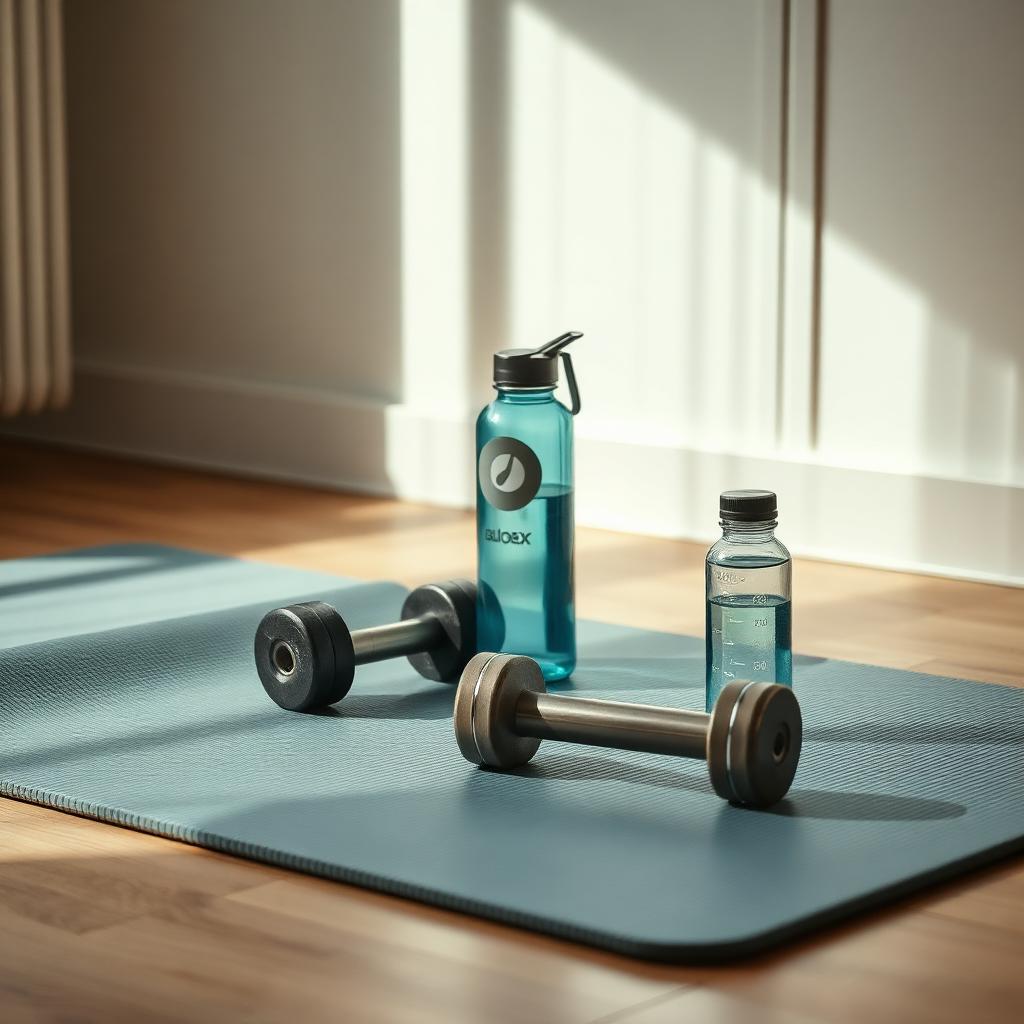
Sometime in the early forties, a quiet shift starts to happen. The four hours of sleep you used to recover from in a single coffee now take three days. The same workout that built muscle at 32 produces soreness without progress at 42. The dietary indulgences that left no trace at 28 sit visibly on the waistline at 48. The habits that carried the first half of life — late nights, ad-hoc fitness, occasional sleep debt, weekend overeating — gradually stop carrying. Most people interpret this as decline. Some of it is. Most of it is a structural change in what habits the body and brain are responsive to, and the response is not to fight harder but to update the playbook.
The forties are the highest-leverage decade for habit work. The compounding window for everything that matters in the second half of life — cardiovascular health, muscle mass, bone density, cognitive function, relational depth, financial discipline — is still open. The habits you build between 40 and 50 are the ones that determine what 70 looks like. The habits you keep coasting on are the ones that quietly hand you a more limited 70.
What actually changes in your 40s
The physiological shifts are real and well documented. They're not catastrophic, but ignoring them is.
Muscle mass starts declining around 1% per year from the late 30s onwards, accelerating if not actively resisted. This is sarcopenia, and it's the single biggest determinant of physical capacity in the second half of life.
VO2 max declines roughly 10% per decade after the early 30s without targeted aerobic work. The drop becomes consequential in the 50s; the habits to slow it are built in the 40s.
Bone density peaks in the 30s and starts declining, with the rate of loss accelerating sharply at menopause for women. Resistance training and adequate protein are the habits that bend this curve.
Sleep architecture changes. Deep sleep declines. Recovery from sleep debt slows. The "I can run on five hours" habit of the 30s becomes a chronic deficit in the 40s.
Cognitive flexibility (the ability to switch between tasks and absorb new patterns) remains strong, but processing speed slowly declines. Crystallised intelligence — accumulated knowledge — keeps rising. The habits that compound here are reading, deliberate practice, and protected attention.
Hormonal shifts (perimenopause for women, slower testosterone decline for men) affect mood, sleep, body composition, and motivation. None of these are individual failings. They are predictable physiology that requires updated habits.
The habits that stop working
Some habits that genuinely worked in your 20s and 30s should be retired in your 40s. Holding onto them in the name of identity is one of the most common reasons people start to feel "old" prematurely.
The all-or-nothing fitness habit. A four-day-a-week heavy lifting program with no recovery emphasis worked at 28. At 42, it produces a slow accumulation of small injuries that compound. Replace with a three-day program plus two days of mobility, walking, or zone-2 cardio.
The flexible bedtime. Bedtime in your 30s could float by an hour and recover by the weekend. In your 40s, a stable bedtime within a thirty-minute window is the foundation everything else sits on. Treat it like a meeting, not a preference.
The "I'll eat well during the week" habit. Weekend overeating used to be invisible. In your 40s, the metabolic response is slower and the recovery is incomplete. Replace with a consistent baseline across all seven days; the variance that worked is no longer free.
The reactive work habit. Email-first mornings, meeting-stuffed days, deep work whenever it fits — this pattern in your 20s and 30s ran on cognitive surplus. In your 40s, cognitive bandwidth is more finite, and reactive work crowds out the high-value thinking that defines mid-career contribution. Protect mornings or watch the work you actually care about stop happening.
The deferred annual checkup. Skipping medical follow-up at 30 was usually fine. At 45 it's the difference between catching things at the curable stage and finding them at the consequential stage. Annual bloods, blood pressure, age-appropriate screening — all are habits, not events.
The seven habits that compound hardest in this decade
If you build these in your 40s and let them run for a decade, the dividend in your 50s and 60s is enormous.
1. Resistance training, twice a week minimum. Two 45-minute sessions of progressive resistance work per week, hitting all major movement patterns. The single highest-leverage habit for the second half of life. It protects muscle mass, bone density, metabolic health, and functional capacity. The compounding window is open until your late 60s; the dividend is independence in your 80s.
2. Daily walking, ninety minutes total. Spread however suits your life. The walking habit is the cardiovascular and cognitive baseline that protects everything else. Cheap, low-injury, compatible with conversation and audio. Replaces almost nothing in your schedule and provides outsized return.
3. Protein-first meals. A protein target of roughly 1.6g per kg of body weight per day, distributed across meals. Protein is the macronutrient with the largest impact on muscle preservation and satiety; the habit is to anchor each meal around it rather than treat it as a side.
4. A consistent sleep window. A 30-minute bedtime and 30-minute wake-time band that holds at least five days out of seven. The body of a 45-year-old is more sensitive to sleep variability than the body of a 25-year-old. The window matters more than the optimal hours.
5. A daily reading habit. Twenty minutes minimum, ideally first thing or last thing in the day. Reading is the simplest, most cumulative habit for protecting cognitive function and continuing to grow crystallised intelligence. It has the side effect of replacing scroll time, which competes with sleep, attention, and mood.
6. A weekly long social ritual. One recurring social commitment that runs without renegotiation — a weekly meal, a monthly group, a regular call with old friends. In your 40s, social structures don't maintain themselves; the school-and-work scaffolding that held them in earlier life is gone, and isolation creeps in by default unless explicitly resisted. Loneliness in midlife is a major health variable; the habit response is calendared, recurring social contact.
7. A financial review habit. A monthly 30-minute review of spending, saving, and one long-horizon target (retirement, mortgage, education). The 40s are the financial decade with the highest compounding potential remaining. The habit doesn't need to be sophisticated; it needs to be consistent.
The protocol for installing these in a busy life
Most 40-somethings reading this list will recognise it as obviously right and immediately feel they have no room to install it. The protocol that works:
Install one per quarter, not all at once. Pick the one with the most leverage for your specific life and let it stabilise for ten to twelve weeks before adding the next. By the end of two years you have all seven running.
Anchor each to existing infrastructure. Resistance training to a recurring calendar block, walking to the school run or commute, protein to existing meals, sleep window to current bedtime ± 30 minutes, reading to existing wind-down, social ritual to a recurring family meal, financial review to the first Sunday of the month.
Use the partner or household. Almost every habit on this list works better as a household practice than a solo one. Family resistance training. Walks together. Protein-led meal planning. Shared bedtime. Shared financial review. Solo habit-building at 45 is harder than it has to be.
Treat injury and illness as data, not failure. The recovery curve is longer than it used to be. Building in a deload week every six to eight weeks of training prevents the chronic small-injury accumulation that ends most adult fitness habits.
The reframe
Your 40s are not the decade where habits start to be harder; they are the decade where the wrong habits stop hiding. The body and the brain are still highly responsive — arguably more responsive to good inputs than at any earlier age, because the gap between optimal and default is now visible. The seven habits above don't require a personality transplant. They require an update to the operating system that ran the first half of your life.
The version of you in your 60s and 70s is built right now, not later. The habits you install in this decade are the ones that decide what's possible in the next two. There is no decade where compounding matters more. Start with one. Let it stabilise. Add the next. By the time you're 50, the playbook is rewritten and the second half of life has a foundation under it.
The decade's most common habit mistakes
Three patterns produce most of the avoidable damage in this decade. They're worth naming because they're not obvious from inside them.
Mistake 1: Trying to train like a 25-year-old. The instinct to prove that you've still got it produces a predictable pattern: too much intensity, too little recovery, an accumulating injury load that ends the fitness practice entirely by 50. The fix is counterintuitive — train slightly less hard, recover more deliberately, and keep training for the next forty years.
Mistake 2: Optimising the wrong metric. Many midlife fitness practices target appearance (body fat percentage, weight on the scale) when the variable that actually determines life quality in the second half is functional capacity (strength, mobility, aerobic base, balance). Optimising for the visible metric while the underlying capacity slowly erodes is one of the more common 40s mistakes, and it shows up as a 65-year-old who looks fit and can't carry their own shopping.
Mistake 3: Treating sleep as a discretionary variable. Sleep in the 40s isn't a lifestyle preference; it's a foundational input. Chronic five-to-six hour nights in this decade produce measurable cognitive decline, weight gain resistance, and mood degradation that no other habit can compensate for. The habit isn't elaborate; it's a defended bedtime.
The midlife cognitive habits
Cognitive function in the 40s is highly responsive to a small number of habits that most people drop precisely when they need them most.
Active learning, not passive consumption. Listening to podcasts is not learning; it's information bathing. The cognitive habit that matters is active engagement — reading a book and writing about it, learning a skill that requires practice, taking a course that has assessments. The 40s brain remains highly plastic; it just requires more deliberate input than the 20s brain did.
Hard conversation and complex problem-solving. The cognitive workouts that maintain function in the 40s involve sustained engagement with difficult ideas and difficult people. Avoiding both, which is the path of least resistance, is the cognitive equivalent of not lifting heavy things. Mentoring, teaching, deep collaboration, and reading challenging material all qualify.
Novel skill acquisition annually. One new skill per year — a language, an instrument, a craft, a sport — keeps the brain laying down new neural patterns. The skill doesn't have to reach mastery; the act of learning is the habit. The brains that maintain function into the 70s and 80s are almost universally brains that kept acquiring new skills past the age where it was professionally required.
The financial 40s
The 40s are the decade where compounding does or doesn't happen. The habits that matter are unglamorous: maximise tax-advantaged retirement contributions, automate an investment habit that runs without thinking, settle high-interest debt aggressively, and resist the lifestyle inflation that comes with peak-earning years. The decisions made in this decade compound for the next thirty years; small habits installed now produce outsized outcomes by 70. This is the boring infrastructure work that matters more than any visible self-improvement project.
One sentence to take with you
The version of you in your 60s and 70s is being built right now, and the habits installed in this decade — resistance training, walking, protein, sleep, reading, social ritual, financial review — are the ones that decide what the second half of life is actually capable of.
None of the seven habits above are dramatic. None of them require a personality transplant or a new identity. They are quiet, repeatable inputs to a body and brain that remain remarkably responsive to good inputs for the rest of life. The 40s reward consistency more than intensity, structure more than effort, and stability more than novelty — and the small adjustments to the old playbook produce outsized returns by the time the 60s arrive.
Ready to build the habit?
HabitPal is the gentle AI coach behind every article on this blog.