21 Habit Triggers Hiding in Your Home (and How to Use Them)
Your home is already a habit-trigger machine — most of the triggers just aren't pointing at the habits you want. A room-by-room guide to redesigning your space for the habits that matter.
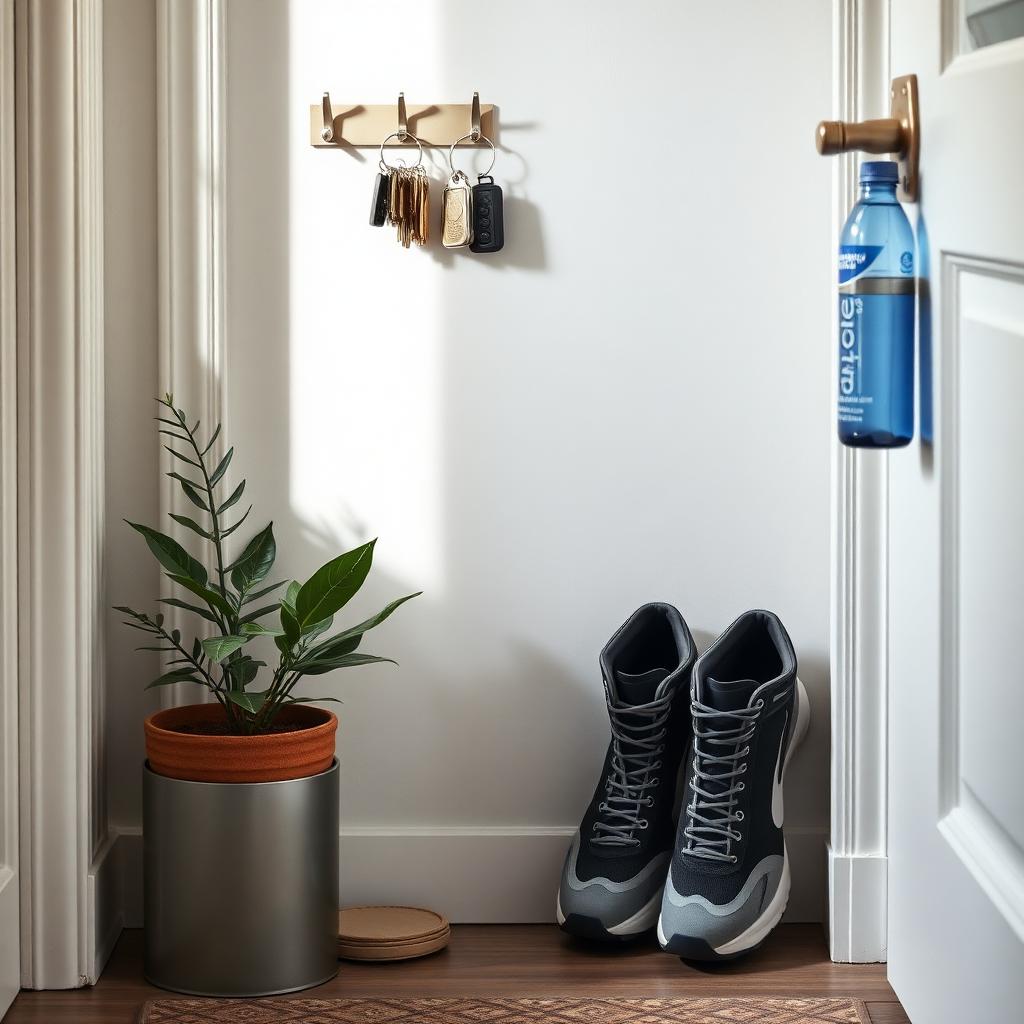
Walk through your home as if you were seeing it for the first time. Every object, every surface, every threshold is doing some kind of work. The keys on the hook by the door. The bowl of fruit on the counter, or its absence. The book left on the bedside table, or the phone left there instead. The shoes by the entryway. The half-finished water glass. These objects are not decorative. They are habit triggers, and they are quietly suggesting behaviours to you every time you encounter them.
The question isn't whether your home is shaping your habits. It already is. The question is whether the habits it's shaping are the ones you'd choose. For most people, the answer is no. The default home design — phone on the bedside, snacks on the counter, screens dominating the living room, exercise gear buried in a cupboard — is producing a predictable set of behaviours that almost no one explicitly wanted. Redesigning the home to trigger the habits you actually care about is one of the highest-leverage moves in personal change, and it costs almost nothing.
Here are twenty-one specific triggers, room by room. Most take under fifteen minutes to install. All of them work by changing what's the easiest thing to do in a given space.
The bedroom (triggers 1–4)
1. A full glass of water on the bedside table, refilled at night. The first behaviour of the day becomes hydration instead of phone-checking. The glass is the trigger; drinking it before reaching for anything else is the habit. Effect compounds across hydration, headache reduction, and mood.
2. A paperback book on the pillow. Placed deliberately every morning when the bed is made. The book becomes the trigger for reading before sleep — physically present and slightly in the way until you pick it up. Phone goes in another room; the book takes its place.
3. Exercise clothes folded on the chair the night before. The clothes are the cue. Reduces the morning decision-load from "should I exercise" to "I'm already wearing the clothes." Tiny intervention, large effect on morning workout adherence.
4. The phone charging in the kitchen, not the bedroom. Removes the single biggest sleep-disrupting and morning-stealing trigger in most homes. The alarm becomes a cheap clock alarm; the morning becomes yours instead of the algorithm's.
The bathroom (triggers 5–7)
5. Floss on top of the toothbrush. Stacks the flossing habit onto the existing brushing habit by making the floss physically unavoidable. The most reliable flossing habit improvement most adults can make.
6. A two-minute stretch mat or towel on the bathroom floor. While the kettle boils, while the toothbrush runs, while you're waiting for the shower to warm up — the mat is the cue for the two-minute mobility flow that prevents most of the small joint stiffness that compounds over the years.
7. Vitamins or medication next to the toothbrush. Stacks medication adherence onto an already-automatic morning behaviour. Adherence rates for daily supplements roughly double when the bottle lives next to the toothbrush rather than in a cupboard.
The kitchen (triggers 8–13)
8. A bowl of fruit on the counter at eye level. The most-studied home behaviour-change intervention in the nutrition literature. Visible fruit at eye level increases consumption by 70%+ over the same fruit stored in the fridge. Buy what you'll actually eat, leave it visible, replace the bowl weekly.
9. The water bottle by the kettle. The act of putting on the kettle becomes the trigger to refill the water bottle. Doubles daily water intake for most people, with no conscious effort.
10. The healthy default snack at the front of the cupboard. Whatever you want to eat more of (nuts, dried fruit, oatcakes) goes at the front; whatever you want to eat less of (crisps, sweets) goes behind it or in an opaque container higher up. The path of least resistance becomes the better choice.
11. The kettle and the meditation cushion in proximity. If you meditate, place the cushion within sight of where you make your morning coffee. The kettle's click becomes the trigger to sit. This single design move converts "I should meditate" into a behavioural reflex.
12. The wall calendar visible from the breakfast spot. One large physical calendar (not a digital one) where the day's priorities and any habit streaks are visible while eating. The breakfast moment becomes the daily intention-setting moment without requiring a separate ritual.
13. A "menu board" of three meal options on the fridge. Decision fatigue is one of the biggest contributors to ad-hoc unhealthy eating. A small whiteboard with three predetermined dinner options removes the daily 6pm "what should we eat" spiral and dramatically reduces takeaway frequency.
The living room (triggers 14–17)
14. The TV remote in a drawer, not on the coffee table. Removes the visual cue that initiates the default evening behaviour. The 20 seconds of friction to retrieve the remote is enough to interrupt the autopilot pattern.
15. A book on the coffee table where the remote used to be. Replaces the cue rather than just removing it. The book is now the most prominent object in the visual field when you sit down to relax. The behaviour follows the cue.
16. A musical instrument visible and ready. Guitar on a stand rather than in a case. Piano lid open rather than closed. Visibility is roughly 80% of practice frequency for casual musicians. The instrument in the case is the instrument that doesn't get played.
17. The phone basket by the front door. A small bowl or basket where phones go when family members are home for the evening. The basket is the trigger for device-free time. Works dramatically better than verbal rules about screen time.
The entryway (triggers 18–19)
18. Walking shoes by the door, not in a cupboard. The presence of running or walking shoes at the door is one of the strongest predictors of daily movement. The shoes in the cupboard might as well not exist; the shoes by the door get used.
19. The reusable shopping bags hanging on the door handle. The bags by the door eliminate the most common reason people don't bring them — they forget on the way out. Habit installed in three seconds of redesign.
The workspace (triggers 20–21)
20. The phone in another room during work blocks. Not face-down on the desk. Not in a drawer in the same room. In a different physical space. The cognitive cost of having a phone visible during focused work, even unlocked, is measurable and large. Removing it is the single highest-leverage workspace change.
21. A paper notebook open on the desk, pen on top. The open notebook is the cue for capture-as-you-go thinking — to-dos, ideas, half-formed thoughts — that would otherwise live in apps and get lost. The pen on top removes the friction of finding it. Most people who switch from digital-only to paper-plus-digital capture become noticeably more productive within a month.
The principle behind all twenty-one
Look across the list and a single principle emerges. The habits you want to do should be the easiest thing to do, by visible default. The habits you want to drop should be the hardest, by deliberate friction. Almost every entry above is a small intervention that changes what's visible, what's reachable, or what's the path of least resistance.
This is, in the end, what habit-friendly home design looks like. Not a renovation. Not a Pinterest board. A series of small object placements that quietly redirect the behaviour the room is already producing. Most people's homes are already running a habit program — it's just running someone else's program (the algorithm's, the supermarket's, the TV's). Redesigning the cues redirects the program back to you.
How to install
Don't try to do all twenty-one in a weekend. Pick three from the rooms where you spend the most time. Install them today. Run them for two weeks and notice what changes. Add three more. Within a couple of months, the home is a different machine, and the habits you've been trying to build through willpower are happening through design instead.
Your home was always going to shape your habits. The only choice you have is whether the shape is intentional. Twenty-one small interventions, most taking under five minutes each, and the default behaviour of the space shifts toward the life you've been trying to build. That's not a small move. It's one of the largest leverage points available to anyone, and it doesn't cost anything but attention.
The principles behind the list
If you understand the four principles underneath the twenty-one triggers, you can design new ones for your own habits without needing a list.
Principle 1: Visibility is roughly 80% of frequency. Objects that are visible in your daily eye-line get used. Objects in cupboards, drawers, or other rooms might as well not exist. The single most powerful intervention for any habit you want to do more is to make the relevant object visible. The single most powerful intervention for any habit you want to do less is to put the relevant object behind a closed door.
Principle 2: Friction is a knob you can turn. Every habit has an activation energy — the amount of effort required to start it. Reducing activation energy for desired habits by even twenty seconds (laying out clothes, charging the device, opening the book) is enough to shift adherence by 10-20 percentage points. Increasing activation energy for unwanted habits (phone in another room, snacks in opaque containers high up) has the equivalent effect in the opposite direction.
Principle 3: Sequence beats schedule. Pairing a new habit to an existing one is more reliable than pairing it to a time. "After I make coffee, I meditate" works; "I meditate at 7am" tends not to. The home design choice that supports this is to physically locate habit objects near the trigger they're paired to. Cushion near kettle. Floss on toothbrush.
Principle 4: One change at a time. Redesigning the whole house in a weekend produces enthusiastic chaos and a reversion to the old layout by month two. The home redesign that sticks happens one object at a time, with each change running for two weeks before the next is introduced. This is slower and more boring. It works.
A weekend protocol for habit-friendly redesign
If you want to do a deliberate one-weekend pass, here's the protocol that produces durable change.
Saturday morning, 30 minutes: Walk through every room with a notebook. For each habit you want to install, identify the single highest-leverage object placement or removal. For each habit you want to drop, identify the single highest-leverage friction increase. Don't act yet.
Saturday afternoon, 60 minutes: Implement five of the changes you identified — three install moves, two friction moves. Pick the easiest five, not the most important. The goal is momentum, not optimisation.
Sunday morning: Live a normal Sunday in the redesigned space. Notice what feels different. Notice what feels worse. Some redesigns won't survive the first day of contact with real life; that's fine, revert them.
The following weekend: Add three more changes. Continue at this pace until the house feels designed for the life you want, rather than the life you currently default to. Most people get there in four to six weekends.
One sentence to take with you
Your home is already running a habit program. The question is not whether to design it — that decision was made years ago — but whether to keep running the algorithm's program or to quietly redirect it, one visible object at a time, toward the habits you actually want.
None of the twenty-one interventions above cost more than a few pounds, and most cost nothing at all. The total time to install all of them is roughly an afternoon spread across several weekends. The compounding effect on daily behaviour, across a year, is larger than almost any other intervention available to a person without a coach, a therapist, or a personal trainer. Design the cues. Let the room do the work. The habits follow on their own.
Ready to build the habit?
HabitPal is the gentle AI coach behind every article on this blog.