Why Habit Motivation Dies on Day 14 (and How to Push Through)
There is a predictable motivation collapse around day 14 of every new habit. It isn't a personal failing — it's a neurochemical pattern. Here's what's happening, why it's normal, and how to push through.
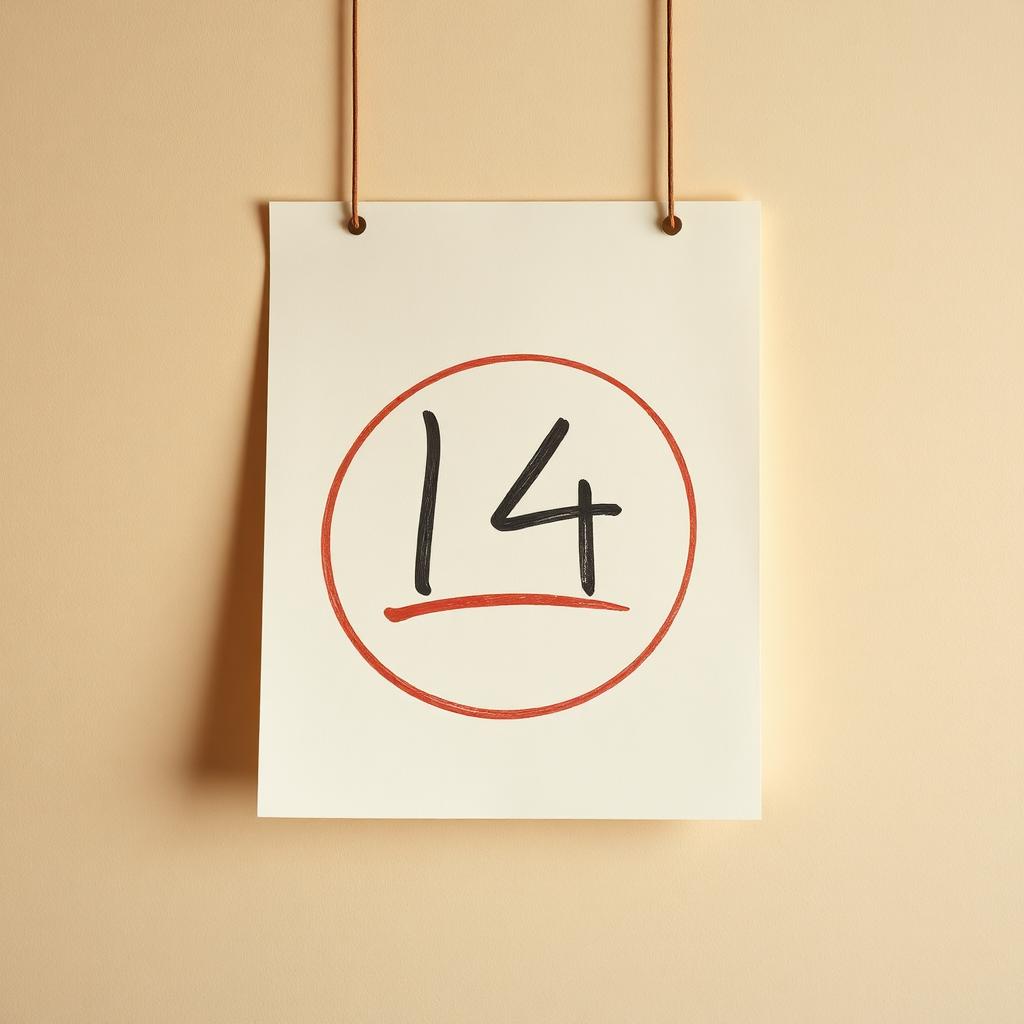
It's almost a cliché in the habit world. The first week of a new habit feels great. The second week is harder but manageable. Then, somewhere between day 12 and day 16, the entire thing collapses. Not dramatically — usually quietly, with a missed day that becomes two, then a week, then a permanent return to the previous baseline. The person tells themselves they "lost motivation," and tries again next month.
What's happening here isn't a character flaw. It's a predictable neurochemical and psychological pattern that researchers have documented across thousands of habit attempts. Understanding it removes most of its power. You stop personalising the dip and start treating it as a known feature of the road — one with a specific shape, a specific cause, and a specific way through.
The dopamine arc of a new habit
When you start a new habit, especially one tied to a goal you care about, your brain releases a surge of dopamine — not as a reward for the action, but as anticipation of the reward. Dopamine is fundamentally a "this is going to be good" signal, not a "this was good" signal. The anticipation is the high.
For the first seven to ten days, the novelty of the habit keeps anticipation elevated. You're imagining the finished book, the leaner body, the meditative calm, the writing career, the new identity. Dopamine is flowing. The behaviour feels meaningful and the effort feels low.
Around day 10 to 14, something changes. The behaviour stops being novel. The brain begins to discount the anticipation, because the reward — whatever it is — isn't actually arriving on the timeline the brain expected. The dopamine signal flattens. The same behaviour now feels harder, despite being objectively the same. This is the dip. It's not psychological weakness. It's the predicted result of how anticipatory dopamine works.
Why this hits on day 14 specifically
The day-14 number isn't magic, but it's surprisingly consistent in self-reported habit data. There are three converging reasons it tends to land there.
First, the novelty curve. Most novel behaviours feel new for roughly ten to fourteen days. After that, the brain has cataloged them as known. New stops being a source of reward.
Second, the visible-progress curve. Almost every meaningful habit produces no visible progress in the first two weeks. You don't lose weight in fourteen days. You don't get noticeably stronger. Your writing doesn't sound better. Your meditation doesn't feel deeper. The lack of evidence collides with the fading novelty at almost exactly the same time.
Third, the life-friction curve. Two weeks is roughly how long it takes for normal life to intrude on a new routine. A big work week, a sick child, a travel day, a fight with your partner. The habit was running on margin, and the margin ran out.
Three forces converging in the same week is what produces the collapse. It looks like a sudden loss of motivation. It's really three slow trends arriving at the same time.
What's actually happening psychologically
The internal experience of the dip has a specific quality. The behaviour feels heavier than it did. The cue still fires, but the response to the cue is now "ugh, again?" rather than "great, let's go." The self-talk shifts subtly — from "I'm becoming someone who does this" to "I'm forcing myself to do this." That shift is the warning sign.
Underneath, the brain is running a quiet cost-benefit calculation. The cost is the daily effort. The benefit was the imagined reward, which is no longer being anticipated with the same intensity. The ratio worsens. The brain is doing exactly what it's designed to do: optimising for energy efficiency. The new habit isn't producing enough payoff to justify the metabolic cost, so it gets quietly dropped.
The dip isn't a moral failure. It's the brain trying to protect you. You don't push through by overpowering it. You push through by giving it a different reason to keep going.
The five-move protocol for surviving day 14
Move 1 — Expect it. The single most effective intervention is to know the dip is coming. People who expect the day-14 collapse are far less likely to interpret it as personal failure, and far more likely to keep going. Write it on your calendar before day 1. "This is the hard week" makes the hard week navigable.
Move 2 — Shrink the habit, don't quit it. The dip is the worst possible time to push for a bigger version of the habit. It's the right time to push for the smallest version. If you've been writing 500 words a day, write 50. If you've been running 5km, run 1km. The point of week three is not progress — it's continuity. Continuity through the dip is what makes the habit permanent.
Move 3 — Switch the reward source. If anticipatory dopamine is the fuel for week one, week three needs a different fuel. The strongest replacement is immediate sensory reward — making the habit pleasant in the moment, not in the imagined future. Coffee with the journaling. Good music with the run. A specific candle lit during the meditation. The reward becomes "this moment is pleasant," not "this will eventually pay off."
Move 4 — Visibilise the streak. A physical record of consecutive days — a paper calendar with Xs, a habit tracker on the fridge, a wall of green dots in an app — creates a small but real cost to breaking the chain. The visual evidence acts as a substitute for the fading internal motivation. The cue to do the habit becomes "I don't want to break the chain" rather than "I want to feel motivated."
Move 5 — Use a 24-hour rule, not a 7-day rule. When motivation is low, the worst question is "do I want to do this for the next six months?" The right question is "can I do the tiny version of this today, just today?" Compress the time horizon to twenty-four hours. The dip survives on long horizons. It struggles against twenty-four hours.
What happens after day 21
If you survive the dip with the habit roughly intact, something interesting happens around day 21 to 30. The habit starts to feel different — less like a thing you're doing, more like a thing you are. The internal narration changes from "I'm trying to write every day" to "I'm a writer who shows up most days." That identity shift is the real prize, and it only becomes available on the far side of the dip.
The dopamine curve also recalibrates. The brain begins to extract reward from the act of completing the habit itself, rather than from anticipating its results. This is why long-term runners say they "feel weird" on days they don't run — the act of running has become its own reward, independent of fitness or weight. This recalibration starts forming around week three and stabilises somewhere between week six and week ten, depending on the habit.
This is also why the 21-day myth originally caught on. It's not that habits take 21 days to form — most research suggests an average of 66 days for full automaticity. It's that something genuinely shifts around day 21 if you make it through the dip. The shift isn't completion. It's escape velocity.
What to do if you're already past the dip and lapsed
Most people read articles like this after the collapse, not before. If you're already lapsed, the move is the same as for any broken streak: define the smallest possible version of the habit, do it today, do it again tomorrow, and never miss twice. The dip you collapsed against the first time isn't waiting for you on the restart. The brain remembers some of the work from the first attempt, and the second run-up is almost always faster.
It also helps to know that the dip recurs in milder forms — around day 30, day 60, sometimes day 90. They're shallower, easier, and more recognisable each time. By the third cycle, the dip is more of a soft slope than a wall. By the sixth cycle, you barely notice it. The habit has stopped being a project and become a part of how you live.
Reframing the dip
The most useful thing you can do for any future habit you start is reframe the day-14 collapse as a milestone, not a failure. It means the novelty has worn off. It means the brain is doing its job. It means the behaviour is transitioning from "thing I'm trying" to "thing I do," and the transition is bumpy by design.
Every long-term habit anyone keeps has been through this dip. Often through several. The difference between people who keep habits and people who don't isn't motivation, discipline, or character. It's that the keepers know what week three feels like, and have learned to do the smallest possible version of the thing on the days it feels the heaviest.
You're not failing on day 14. You're arriving at the part of the road that everyone has to walk through. Walk through it small, and the road continues on the other side.
Ready to build the habit?
HabitPal is the gentle AI coach behind every article on this blog.