Family Habits That Actually Stick: 9 Shared Rituals for Real Households
Shared family habits are some of the highest-leverage rituals in any life — but most of the advice assumes a picture-perfect household. Here's what actually works in real ones.
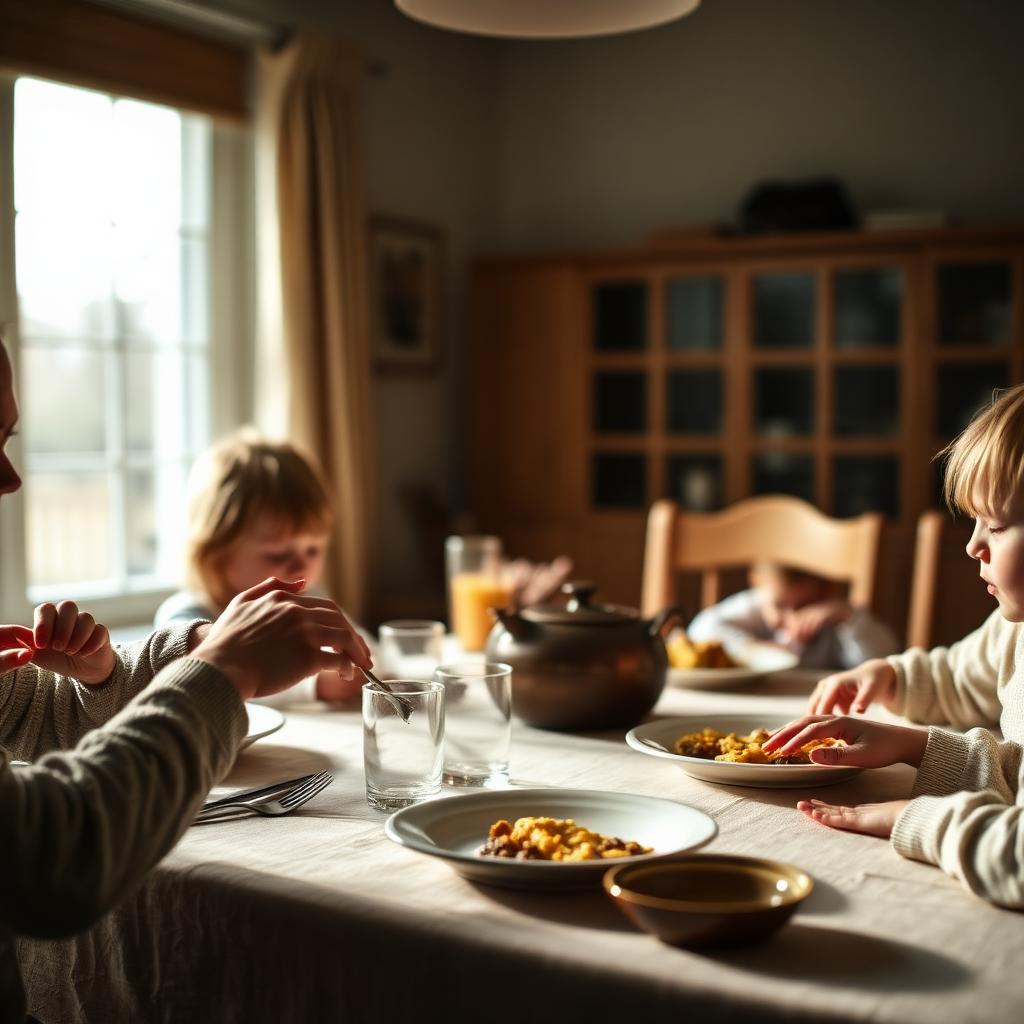
Individual habits get most of the books. Family habits get almost none. Yet the rituals a household keeps together — meals, bedtimes, weekend rhythms, weekly check-ins — have outsized influence on every family member's emotional baseline, sense of belonging, and long-term wellbeing. There's good research on this: families with even one stable shared ritual report measurably better cohesion, child outcomes, and adult satisfaction than families without.
The catch is that most family-habit advice assumes a household that doesn't exist: two adults with predictable schedules, two children who go to bed when asked, a calm kitchen, and a fully unscreened evening. The version that works in real households — where one parent travels, one kid won't eat anything green, and bedtime is a daily negotiation — looks different.
Here are nine family habits that actually survive in real homes, with notes on what makes each one stick.
1. One shared meal a day, eaten without screens
The single most-studied family ritual. Decades of research, including work from the Harvard Family Dinner Project, link a regular family meal to better child outcomes across nearly every metric measured — vocabulary, school performance, mental health, weight stability.
The version that survives in busy households: one shared meal, not three. Often dinner; for early-shift families, breakfast. Twenty minutes is enough. Phones face down on a separate counter (not in pockets — out of reach). The conversation rule: no monologues about the day's logistics. Each person says one thing they enjoyed and one thing that was hard. That's the entire structure. It works.
2. A 10-minute morning huddle
Adopted from agile workplaces and surprisingly powerful at home. Once a day, ideally in the morning, the whole household briefly syncs: what's happening today, who needs the car, who's home for dinner, who has a hard day ahead.
It sounds corporate. In practice it's the single biggest reducer of household friction, because almost every domestic argument starts as a mismatched expectation about logistics. The huddle pre-resolves them. Ten minutes in the morning saves ninety minutes of cross-purposes through the day.
3. A weekly "no-plan" evening
One evening a week with no scheduled activity, no errands, no plans, no special meal. Just the household, in the house, doing nothing in particular together. Usually Friday for working families, sometimes Sunday.
This habit is the antidote to the modern problem of being a family who lives in the same house but never just exists together. The point is to leave the time empty enough that something organic emerges — a game, a long conversation, a movie, an early bedtime. The instinct to fill the time with an activity defeats the purpose. The container is the ritual.
4. A weekly family meeting (yes, really)
This one is widely mocked and quietly powerful. Once a week — Sunday afternoon, often — the household sits together for 20 minutes with a tiny agenda: what worked this week, what didn't, what's coming up next week, and one thing each person wants to do as a family in the next month.
It sounds awkward the first three times. By the tenth, it's the most important time slot of the week. Children get a voice. Logistics get aired. Resentments get small before they get large. The household runs as a team rather than a series of unilateral decisions by the parent with the most bandwidth.
5. Shared bedtime ritual, every night
For households with children, this is non-negotiable infrastructure for the child's nervous system. The exact ritual matters less than the consistency: same sequence, same time window, same atmosphere. Bath, story, song, lights — or whatever the household's version is.
The rule that makes it survive: protect the ritual from being collapsed by busy days. Even a 10-minute version on a chaotic night is better than skipping. The child's brain encodes the predictability, not the elaborateness. A two-page book read by a tired parent at 8:45 is doing more than no ritual at all.
For adults living alone or as couples without children: the same principle applies. A consistent wind-down ritual — even just "lights down, tea, no screens" — is the same infrastructure your own nervous system needs.
6. The Saturday morning slow start
One weekend morning per week that is explicitly slow. No alarm. No scheduled activity before 10am. A long breakfast that takes an hour. Everyone in pajamas longer than is technically necessary.
This habit is the household-level equivalent of a Sabbath without the religious frame. It rebuilds something modern life relentlessly burns down: the feeling that time can be soft, that the household can be a place of rest rather than a launching pad for productivity. Two slow hours a week, protected.
7. A weekly outdoor block
At least one block per week — three hours, ideally — spent outdoors together. Not running errands. A walk, a hike, a park, a beach, a garden, a wander. Phones off or in a bag.
The research on time-in-nature is robust: improvements in mood, attention, family cohesion, and child development across multiple studies. The version that works in real households is the one that's already on the calendar — Sunday afternoon, Saturday morning — and that doesn't require special equipment or skill. A familiar local park, repeated weekly, beats an ambitious monthly hike that gets cancelled half the time.
8. A monthly "where are we?" conversation between adults
For partnered adults: a monthly hour-long conversation, just the two of you, without children, without phones, about how the household is actually going. Not logistics. Not a date night. A check-in.
Three prompts: what's working in our life right now, what's not, what do we want to change before next month. That's it. Most relationship attrition happens through accumulated small unaddressed things — this habit catches them while they're still small. Couples who do some version of this consistently report dramatically lower conflict frequency.
9. A shared annual ritual
One thing the household does every year, in the same way, that no one else does quite like you do. The annual camping trip. The Christmas Eve walk to a specific viewpoint. The first-day-of-summer ice cream. The birthday breakfast in bed.
Annual rituals don't compete with weekly ones; they layer onto them. Their power is in being a landmark — something that marks the passage of years and provides a stable shared reference across decades. Children remember these for the rest of their lives, even when they don't remember the daily routines. They become the household's mythology.
How to install family habits that survive
Four rules separate family habits that take root from ones that get tried and abandoned.
Start with one, not seven. The instinct to overhaul the entire household ritual structure in one go fails almost universally. Pick one habit. Run it for two months. Once it's load-bearing, add another.
Name it explicitly. "Family meeting." "Friday no-plan night." "Saturday slow morning." Named rituals survive better than unnamed ones. The name becomes a small piece of household vocabulary that the habit hangs from.
Make the smallest version unbreakable. On hard weeks, a 10-minute family meeting still counts. A two-page bedtime story still counts. The minimum version must always be do-able, even on the worst week, or the ritual collapses under busy seasons.
Don't optimise. Family habits resist being made better. The bedtime ritual doesn't need a better book selection. The Sunday meal doesn't need an upgraded menu. Their value is in the consistency, not the quality. The moment you try to make the ritual more impressive, you start raising the bar for what counts as "doing it" — and that's when missed weeks start.
One household's actual stack
For grounding, here's a real-world example from a family of four with two working parents: daily 20-minute dinner without phones; daily 10-minute morning huddle; bedtime story for the kids every night without exception; weekly family meeting on Sunday afternoon; Saturday morning slow start; one outdoor block on Sunday afternoon; monthly Saturday-night check-in between the parents after the kids are down; annual one-week trip in August.
That's seven rituals, all small, all robust, totalling about three hours of intentional time per week. The household runs at a dramatically different temperature than households without them — calmer, more connected, more able to absorb hard weeks. None of the rituals are elaborate. All of them are kept. That's the whole formula.
Ready to build the habit?
HabitPal is the gentle AI coach behind every article on this blog.