The Exercise Habit: How to Make Movement Automatic in 60 Days
A 60-day protocol for turning exercise from a thing you have to decide about into a thing your body does on its own — no early alarms, no all-or-nothing programs.
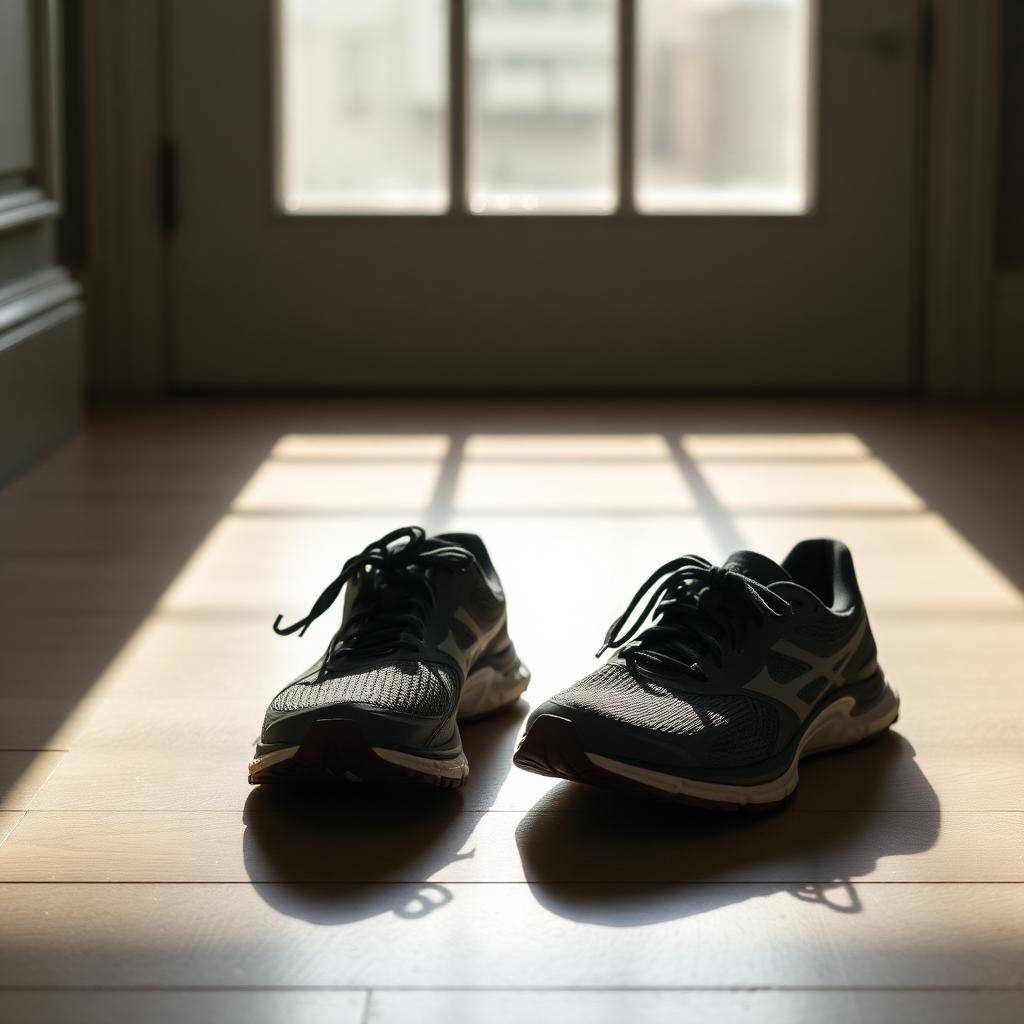
Most exercise programs fail not because the program is wrong but because they ask the wrong question. They ask "what's the optimal workout?" before they've asked "how does this become a thing I do on autopilot?" Optimal workouts that you don't do are worse than mediocre workouts you do four times a week for the next thirty years.
This guide is about the second question. The goal isn't to get you fit in 60 days — it's to install exercise as a habit that's automatic enough to deliver fitness for the rest of your life. Done right, the 60 days will also produce real physical change, but that's a side effect. The actual product is the autopilot.
Why most exercise habits fail
Three predictable failure modes account for the vast majority of collapsed exercise routines.
The intensity trap. The user starts with a program designed for someone with an existing exercise habit — five days a week, hour-long sessions, ambitious progression. The body protests, the schedule strains, and the program is abandoned within three weeks, usually accompanied by an injury.
The morning-person assumption. Every exercise book is written by someone whose body wakes up at 5am ready to move. Most people's bodies do not. Building the habit around an unnatural time for your specific chronotype guarantees failure.
The "I'll go when I feel like it" approach. The opposite failure. Without a fixed time, there is no cue, and without a cue there is no habit. "When I feel like it" is the death sentence for every aspirational behaviour.
The 60-day protocol below is designed to defuse all three.
The 60-day structure
The protocol has three phases, twenty days each. They are deliberately under-ambitious for the first phase, and the under-ambition is the point. The brain is what you're training, not the muscles.
Days 1–20: The 10-minute, four-day-a-week phase
Pick four days of the week and four time slots. The same four, every week. Write them on a calendar. These are non-negotiable not because of the workout, but because of the cue.
The workout itself is ten minutes. Any movement. Walking briskly, bodyweight squats, a few stretches, push-ups against a counter, dancing in your kitchen — anything that involves continuous low-intensity movement for ten minutes. The bar is deliberately at ground level. You are not training your body in this phase. You are training your calendar.
The rules of phase one:
- Showing up counts even if you only move for three minutes.
- You may not exceed 10 minutes, even on days when you feel great. This rule is critical; it prevents the over-extension that causes phase-one collapse.
- If you miss a day, the next session is the same 10-minute version, no "catch-up."
- At the end of 20 days, you assess. If you hit at least 14 of 20 sessions, you advance. If not, you repeat phase one for another 20 days. No shame, no judgment.
Days 21–40: The 25-minute, four-day-a-week phase
Same four days, same four time slots. Now the workout grows to 25 minutes and adds structure. Three to four exercises, done in sequence, repeated for the time block. If you have access to a gym, this is when a simple full-body program (squat variation, hinge, push, pull, walk) enters the schedule. If you don't, bodyweight versions of the same movement patterns work equally well.
The intensity is still moderate. You should finish the session feeling tired but not destroyed. The test: can you do the same session tomorrow if you had to? If yes, the intensity is right. If you'd dread doing it tomorrow, the intensity is too high. Most people's instinct is to push too hard in phase two and burn out by day 30.
At the end of 20 more days, if you've hit at least 14 of 20 sessions, you advance. If not, repeat phase two for another 20 days.
Days 41–60: The 40-minute, four-to-five-day phase
The full habit. Same time slots. The workout is now substantive: a real strength program, a real cardio session, a real yoga class — whatever form of exercise you've decided to commit to long-term. The structure of the habit is by now strong enough to carry the full dose.
At the end of day 60, two things will have happened. First, your fitness will have measurably improved — not dramatically, but real. Second, and more importantly, the cue will fire and your body will move toward the workout without significant deliberation. You will have crossed into automaticity for one specific time slot, four to five times a week.
That is the habit. From day 61 onward, the habit runs itself, and you can think about progression, programming, and goals — because you no longer have to think about whether you'll show up.
The cue design
The single highest-leverage decision in the 60 days is what cue triggers the workout. Three cues work consistently across most people.
The post-wake cue. Get out of bed, drink water, change into workout clothes you laid out last night, walk to the space, begin. This works only if you wake at the same time daily and don't reach for the phone before changing. The phone is the killer — once you've checked it, the cue chain breaks.
The post-work cue. The moment you stop working — closing the laptop, leaving the office — is one of the most underused cues in adult life. It coincides with a natural energy transition. Workout clothes in a bag by the door (or already on, if you can manage it). The walk or drive to the workout is part of the chain.
The pre-meal cue. Before dinner, do the workout. The hunger acts as a small motivational push, and dinner becomes a reward. This works particularly well for people whose mornings are chaotic and evenings are quiet.
Pick one. Run it for the entire 60 days. Do not switch mid-protocol. The cue must become unconscious, and that takes the full duration.
The form of exercise that actually fits a real life
Without a strong opinion on this, the protocol can collapse on a content decision rather than a habit decision. So here are the forms of exercise that hold up best for adults building lifelong habits, ranked by realistic sustainability for an average non-athlete:
- Walking. The most underrated exercise habit in modern life. Brisk daily walks for 30–45 minutes deliver almost all the health benefits the research consistently identifies. The compliance rate is extraordinarily high.
- Bodyweight strength. Squats, push-ups, lunges, planks. No equipment, no commute. Three 25-minute sessions a week is enough to maintain real strength.
- Cycling (commute or recreational). Sustainable for decades. Low-impact. Integrates with transport.
- Yoga. Sustainable into old age. Builds strength, flexibility, and a meditative component most other exercise lacks. Home video sessions are equivalent to in-studio for most users.
- Swimming. Joint-friendly, full-body. Sustainability depends on pool access.
What's not on this list: hour-long high-intensity programs, marathon training, advanced lifting splits, anything that requires hour-plus daily sessions. These can be great once a habit is established, but they're the wrong starting place for "I want to build an exercise habit."
The single biggest mistake to avoid
Don't combine the start of an exercise habit with a diet change, a sleep change, or a job change. Each of those is a significant willpower load on its own. Stacking them is the single most reliable way to burn out at day 18 and conclude you can't sustain any of them.
Build the exercise habit first. Hold it for 60 days. Then layer the next change. The "complete lifestyle overhaul" approach has a survival rate near zero; the "one habit at a time" approach has a survival rate north of 60%.
What success looks like at day 60
If the protocol worked, here's what you should be experiencing on day 60. You don't decide whether to work out — you just work out, at the scheduled time, with mild interest rather than dread. You've missed perhaps eight to twelve sessions across the 60 days (this is normal and expected). You've experienced one significant collapse week, probably around day 30, and recovered from it without restarting from zero. Your fitness has visibly improved. Your relationship to the workout has shifted from "thing I have to make myself do" to "thing my body does on Tuesdays and Thursdays."
That last shift is the prize. Once it's in place, almost any further fitness goal becomes a question of programming rather than psychology. People who reach that shift in their thirties tend to still be exercising consistently in their seventies. People who never reach it tend to spend their whole adult lives starting and stopping. The 60 days are the difference.
Ready to build the habit?
HabitPal is the gentle AI coach behind every article on this blog.