Don't Break the Chain: The Seinfeld Method, Honestly Reviewed
The Seinfeld 'don't break the chain' method, examined honestly — what it gets right about behaviour change, where it quietly backfires, and how to use it without becoming its hostage.
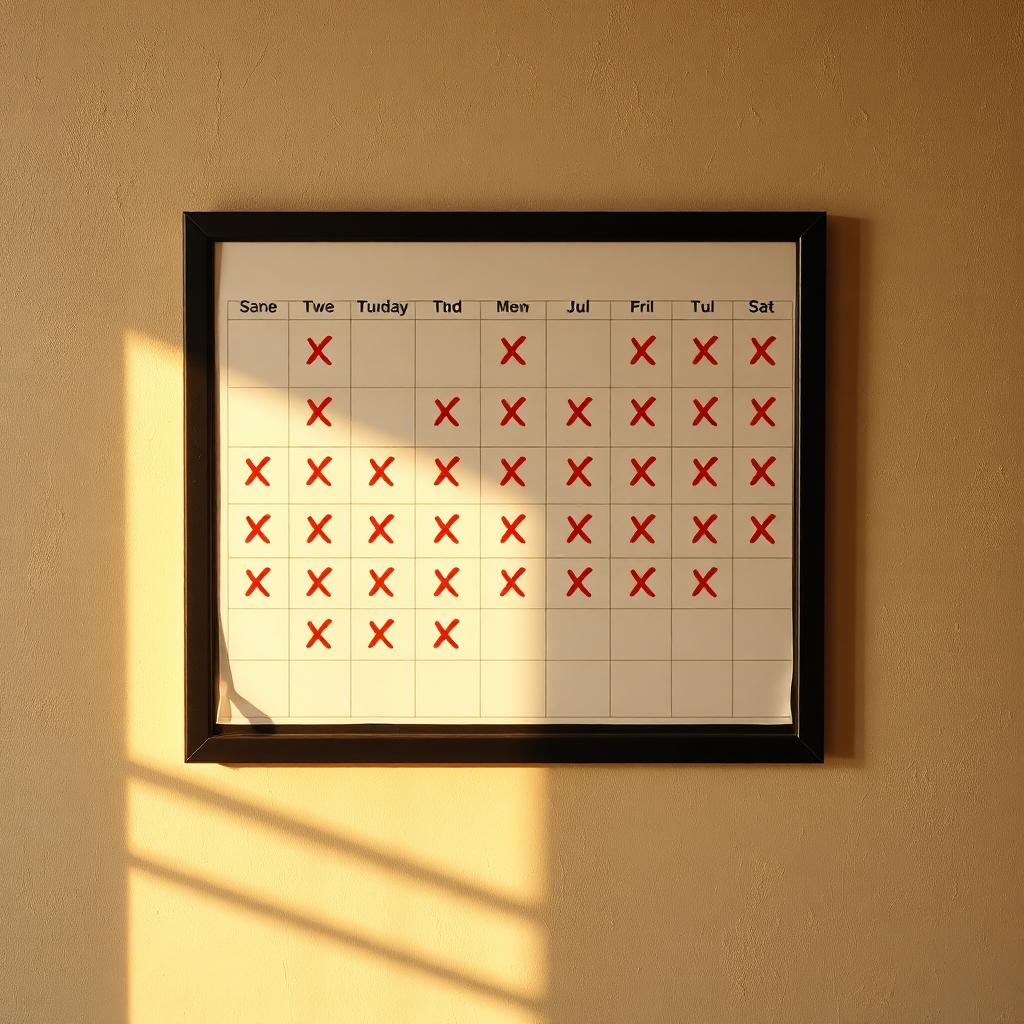
The story is so good it's almost certainly part-myth. A young comedian asks Jerry Seinfeld for advice. Seinfeld tells him to hang a big wall calendar, write a joke every day, and put a red X on each day he writes. After a few weeks, the chain of red X's becomes its own motivation. Don't break the chain.
It's the cleanest piece of habit advice ever distilled. One rule, one tool, one visual feedback loop. It has launched a thousand productivity apps and at least one famous web app called, literally, Don't Break the Chain. And it works — until it doesn't. This is an honest look at when the method is exactly right, and when it's quietly the reason a habit collapsed.
Why it works (the part that's real)
Three behavioural mechanisms do the heavy lifting. The first is the endowed progress effect — the more progress you can see, the more reluctant you are to lose it. A chain of 30 X's is psychologically valuable. The longer it grows, the more it pulls you forward.
The second is identity reinforcement. Every X is a small vote for "I am the kind of person who does this." After enough votes, the behaviour stops being something you do and becomes something you are. The chain isn't tracking writing; it's tracking writer-ness.
The third is decision elimination. Once "don't break the chain" is the rule, there's nothing left to negotiate. You don't have to decide whether to write today; the calendar already decided. Willpower budgets are tiny and easily exhausted. Rules don't draw from that budget.
For a beginner habit in its first 60 days, the chain method is almost unbeatable. It converts a fragile intention into visible momentum faster than any other system I know of.
Where it quietly backfires
The same psychology that makes the chain powerful also makes it brittle. Three failure modes show up again and again.
The all-or-nothing collapse. You miss a day. The chain breaks. The point of the system was the chain — and now it's gone. The temptation to think "well, the streak's dead, what's the point of starting over" is enormous. Many people who quit a habit didn't quit on the day they missed; they quit on the day they were supposed to start over.
The brittle perfectionism. Long chains start to own you. People meditate while sick because they don't want to break a 400-day streak. People log a token "did it" on days they didn't really do it, because the chain matters more than the behaviour. At that point the system has inverted: you're serving the chain instead of the chain serving you.
The wrong-habit lock-in. When a habit isn't working — when it's the wrong habit for this season of your life — the chain makes it harder to quit, not easier. You keep doing something that no longer serves you because stopping feels like failure.

The modern fix: "never miss twice"
James Clear popularised a refinement that fixes the worst failure mode: never miss twice. Missing one day is an accident. Missing two is the start of a new habit — the habit of not doing the thing. As long as you come back on day two, the chain — operationally, behaviourally — is intact, even if the calendar has a blank square.
This small change preserves everything the chain method does well (momentum, identity, decision elimination) without the all-or-nothing collapse. It also matches how habit formation actually works in the brain. Behavioural research has consistently found that occasional misses don't measurably damage habit strength as long as they don't cluster.
How to use the chain method without becoming its hostage
Five rules, learned the hard way.
One. Use it for the first 60 days, intensely. This is when the chain does its best work. Hang the calendar. Mark the X. Let the visual feedback do its job.
Two. After day 60, downgrade the chain to a tool, not a contract. Switch to a monthly view that shows a long average rather than a single unbroken line.
Three. Build in planned rest days from the start. One day a week, marked in advance, where not doing the habit is the plan. The chain stays unbroken; the body and mind get the recovery they need.
Four. Define what counts honestly. A token version of the habit on a hard day (one breath of meditation, one sentence of writing) is fine. A fake checkmark is not. The day you start logging things you didn't do is the day the system loses meaning.
Five. Be ready to break the chain on purpose. When a habit is no longer serving you — when life changes and the priority shifts — break it deliberately, with a note explaining why. You're not failing; you're reallocating. That single sentence preserves your relationship with your own consistency.
What about apps that automate the chain?
Most modern habit trackers — including HabitPal — bake in some version of the chain method. The good ones add three things a wall calendar can't: streak protection through a planned rest day or a single miss, gentle context-aware nudges before the chain breaks, and a longer-horizon view (the monthly grid, the year-at-a-glance) that prevents the all-or-nothing trap. The chain is still there as motivation, but it's no longer the only thing holding the habit up.
The bottom line
Don't break the chain is one of the best habit techniques ever invented, and one of the most commonly misapplied. Use it as a launchpad, not a life sentence. Let it carry you through the fragile first weeks. Then graduate to a system that measures your long average, protects you from a single missed Tuesday, and lets you change direction without feeling like you failed.
The chain was never the point. The behaviour was.
Read next
For the broader principles, see How to Stay Consistent. For the four-laws framework, Atomic Habits Summary.
Ready to build the habit?
HabitPal is the gentle AI coach behind every article on this blog.