What 365 Days of Habit Tracking Actually Reveals (Most People Quit by Day 23)
The average habit tracker is abandoned on day 23. A year of data reveals which habits survive — and the four traits they share. A field guide for staying the course.
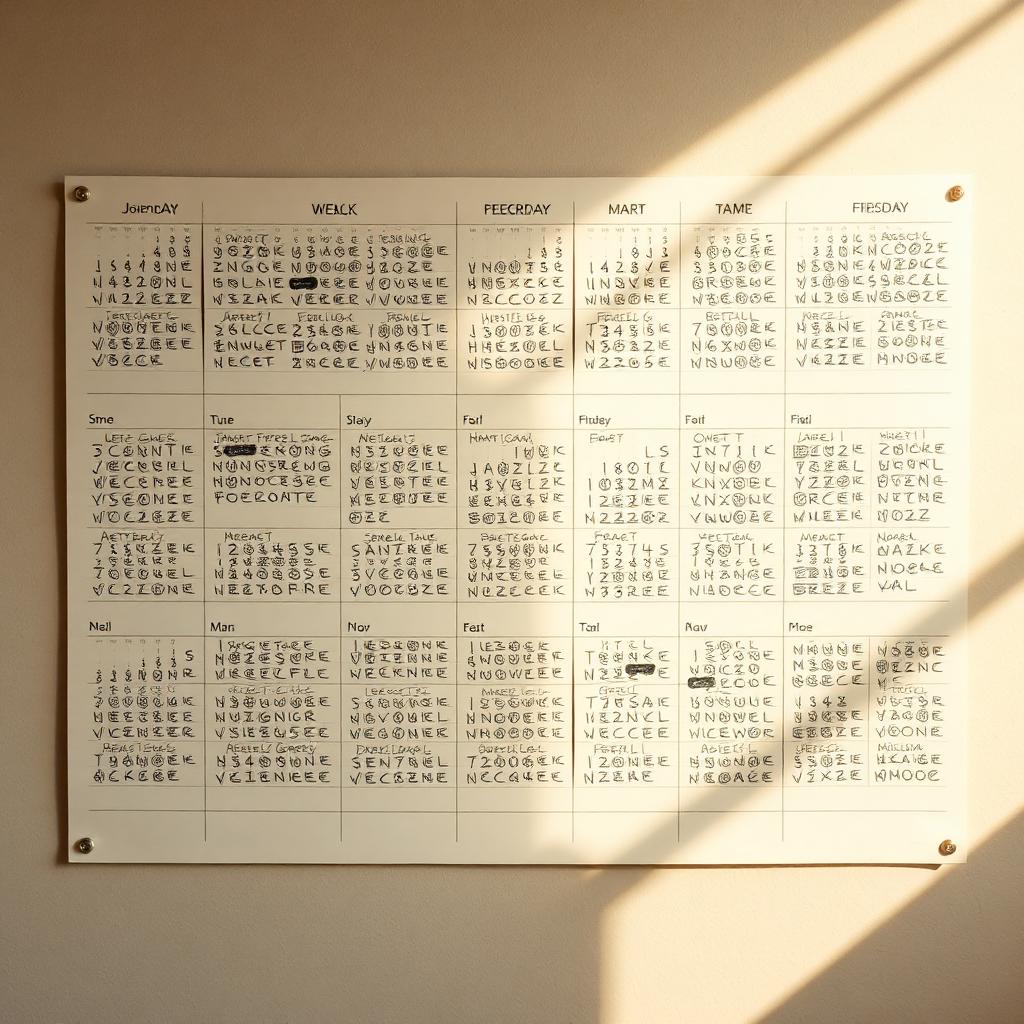
The average habit tracker is abandoned on day 23. That's not a moral failing — it's a design failure. Most habits people put on a tracker were never going to survive a full year, because they weren't built to. Looking at a year's worth of tracking data — from journals, apps, and behaviour-science studies — a clear pattern emerges. The habits that make it to day 365 share four traits. The ones that die in week three share four others.
This isn't a pep talk. It's a field guide to which habits to bother starting in the first place, based on what actually happens after the new-year energy fades.
The shape of a typical year
Imagine a year of habit tracking laid flat. The first two weeks are dense — almost every cell ticked. By week three, the first habits start dropping out. By week six, half the original list is gone. By month three, the list has self-edited to a small core that the person keeps until the end of the year. That core averages three to five habits, no matter how many they started with.
The interesting question isn't "why did most habits die?" It's "what do the survivors have in common?"
What the survivors share
1. They take under five minutes. Across the data, the habits with the highest one-year survival rate are short. Five-minute reads. Two-minute stretches. One-minute breathwork. Twenty-minute walks. The moment a habit demands a 45-minute block, its survival rate collapses — because a single bad week wipes out the cadence and the gap becomes the new normal.
2. They have a fixed anchor. Survivors are almost always attached to an existing routine that can't easily be skipped: brushing teeth, making coffee, the commute, lights-out. Habits anchored to "free time" or "when I get around to it" have the lowest survival rate of any category. Floating habits don't float — they sink.
3. The reward is felt the same day. Habits with delayed payoffs (saving money, eating well) survive only when paired with an immediate proxy reward — usually the tick on the tracker itself, or a streak count. Pure delayed-reward habits with no daily marker have the highest abandonment rate by week six.
4. They were chosen, not imposed. Habits picked because "I should" survive at less than half the rate of habits picked because "I want to see what happens if I do this." The wording sounds soft; the data is hard. Internal motivation outlasts external pressure by a factor of two to three across every category.
What the casualties share
1. They were too ambitious for day one. "Run 5k three times a week" doesn't survive a snowstorm in week two. "Walk for ten minutes daily" does. Ambitious habits are not better habits — they're more fragile ones.
2. They were vague. "Be more present" is not a habit. "Phone in a drawer from 6 to 7pm" is. Vague habits cannot be ticked, and what cannot be ticked cannot be tracked.
3. They depended on conditions outside the person's control. "Cook dinner from scratch" dies in a week with three late meetings. "Eat one vegetable at lunch" survives almost anything.
4. They had no recovery plan. Every habit gets missed. The ones that don't survive are the ones with no rule for what to do on day two. The single most predictive trait of one-year survival is what behaviour scientists call never miss twice — a personal rule that one missed day is fine, two is not.
The day 23 cliff
Why 23 days? It's the point where the novelty has worn off but the behaviour isn't yet automatic. Research on habit automaticity suggests most simple habits reach reliable automation somewhere between 59 and 254 days, depending on complexity. Day 23 is squarely inside what behaviour scientists call the "dip" — the period where you're working hard for no felt reward, the new identity hasn't formed, and the original burst of motivation has fully metabolised.
The people who push through the dip aren't more disciplined. They're better designed. They picked smaller habits, anchored tighter, with faster rewards, and a recovery rule for the inevitable miss. The dip still happens — they just have less weight to carry through it.
What the data suggests you should actually do
Start with three habits, not ten. Make each one under five minutes for the first thirty days. Anchor each to a time, place, or preceding action. Tick them somewhere you'll see daily, and write down — in advance — the rule for what happens when you miss. "If I miss Tuesday, I do the two-minute version on Wednesday, no make-up session." That's the rule.
Re-evaluate at day thirty. The habits that are still in your list are almost certainly going to make it to day 365. The ones that have already wobbled are giving you information: they were too ambitious, or wrongly anchored, or wrongly chosen. Drop them without shame. A short list that survives the year beats a long list that doesn't.
What a year of tracking actually gives you
Three to five habits, ticked roughly 80% of the time, for 365 days, is not a small accomplishment. That's somewhere between 850 and 1,400 individual deposits into the bank account of who you are. The change you'll see at the end isn't dramatic — it's the kind of change other people notice before you do. Quieter, fitter, calmer, more reliably yourself. Most people quit by day 23 because they were promised dramatic. The honest answer is that the dramatic version doesn't survive. The quiet version does.
The four predictable dips in a year of tracking
A full year of habit tracking isn't a flat slog — it has four distinct dips, each with its own cause and its own fix. Knowing the dips in advance is most of what gets people through them.
The day 23 dip (novelty crash). The original burst of motivation has fully metabolised, the habit isn't yet automatic, and the felt reward is at its lowest. The fix is to shrink the daily commitment temporarily — drop to the two-minute version — and let automaticity catch up. The volume comes back; the cadence is what matters here.
The day 60 dip (boredom and identity wobble). The habit is now automatic, which means it feels less meaningful. The brain stops releasing the small dopamine ping that came from "doing something new," and the act feels mechanical. The fix is to add a small variation — a different route, a new book, a fresh playlist — without changing the underlying habit. Variation refills the reward; abandonment empties the bank.
The day 120 dip (life intrusion). Around month four, real life almost always interferes — a project deadline, an illness, a family event. Trackers without a missed-day rule fall apart here. Trackers with one survive. This is when the recovery rule earns its keep.
The day 250 dip (existential reassessment). Late in the year, people start asking whether the habits they chose in January are still the right ones. They usually aren't, entirely — and that's fine. Day 250 is a permission slip to drop habits that no longer earn their slot and replace them with ones that do. The list is supposed to evolve.
Tracking tools that survive (and the ones that don't)
Across a year of use, certain tool categories die at predictable rates. The most fragile is the bullet journal — beautiful, high-effort, and quietly collapses when life gets busy. Next most fragile: complex Notion dashboards. The setup energy is high, the maintenance overhead is constant, and the elegance becomes a liability when the week falls apart.
The tools with the highest one-year survival rate are dull. A paper page on the fridge. A single-screen app with a once-a-day prompt. A printed monthly grid taped inside a notebook. What they share is low friction at the moment of marking, high visibility throughout the day, and zero setup overhead. The fanciest tracker you've seen on Pinterest is almost always less durable than a hand-drawn grid taped to the kitchen counter.
What the year actually changes about you
People expect a year of habit tracking to change their results. The bigger and quieter shift is what it changes about their relationship with themselves. After 365 days of small daily evidence, you stop wondering whether you're someone who can stick with things. The question simply stops being interesting. You have a year of ticks that answers it for you.
This shift is what makes the second year easier than the first, and the third easier still. The underlying habits compound in obvious ways — the body, the skills, the savings, the relationships — but the meta-habit of being someone who keeps small daily commitments is the asset that funds everything else. Most people miss this by quitting before they've collected enough evidence for the meta-habit to land.
If you've already quit: a 7-day restart
Most people reading this have abandoned a habit tracker before. The shame around restarting is the single biggest barrier to ever building one that lasts. So here's a structured restart that bypasses the shame.
Day 1: open the old tracker (or start a new page). Don't recap the lapse. Write today's date and tick one habit — the easiest one. Close the tracker.
Days 2–3: add one more habit. Still no recap, no make-up sessions, no "starting over from January 1" energy. The streak counter starts today.
Days 4–7: add a third habit if you want, but only if it costs under two minutes. By day 7, you'll have a small honest streak built on the most important truth in behaviour change: the next day is always the only day that matters. The lapse is gone. The restart counts.
People who've restarted six times in their life and finally stuck on the seventh aren't different on the seventh attempt — they just stopped giving the lapse moral weight. A year of tracking isn't built by people who never quit. It's built by people who restarted faster.
What the data says about long-term habit retention
The numbers underneath habit tracking are worth knowing. A 2016 analysis of New Year's resolution data found that roughly 80% of resolutions are abandoned by mid-February — about six weeks in. Habit-app retention data tells a similar story: most habit-tracking apps see 50% of users drop off in the first 30 days, and only about 8–12% remain active at the one-year mark.
The 8–12% figure is the one worth focusing on. It's small enough that "being someone who keeps habits for a year" puts you in a meaningfully unusual minority. It's also large enough to prove the strategy works for thousands of people — the year-one survivors aren't unicorns, they're just people who avoided the four dips listed above and got lucky on the habits they chose.
Within that 8–12%, the median number of surviving habits at year-end is between three and five. Almost no-one ends the year successfully maintaining ten habits; almost everyone who tries to does much worse than people who started with three. The retention math punishes ambition and rewards restraint — same pattern, every dataset.
The honest summary for someone starting today
If you're considering a year of habit tracking, here's the compressed advice the full year would teach you the hard way. Pick three habits, not ten. Make each under five minutes. Anchor each to a fixed daily cue. Aim for 80% completion. Write the never-miss-twice rule on the tracker itself. Review for 30 seconds every Sunday. Re-evaluate at days 30, 60, 90, and 180, dropping habits that aren't working without shame.
Run that for twelve months. You won't be a different person — that's not what the year produces. You'll be the same person with a year of small kept promises, three to five solid habits operating mostly on autopilot, and the rare and useful conviction that you can be trusted to do small things every day. That conviction, once earned, is what lets you eventually attempt the bigger things. The tracking is the scaffolding. The person you become through using it is the actual product.
Read next
For how to pick the right habits to track, see What Habits Should You Actually Track?. For the recovery rule that keeps streaks alive, read How to Stay Consistent.
Ready to build the habit?
HabitPal is the gentle AI coach behind every article on this blog.